by Walter Ben Rosin
While reading Charles Mills’s treatise on the dehumanization of nonwhites, The Racial Contract, during the dawn of 2022, I was disgusted by the use of Thomas Hobbes’s political philosophy to segregate and subjugate the victims of western colonization. Mills demonstrates the ubiquity of a philosophical basis for a moral gradient between the “famously amoral and unsafe state of nature” (Mills, 32) and the desire to flee that state modern to society via a contract with one’s sovereign over the past four centuries. The notion of an anarchic state of nature, its moral inferiority to civilization, and the need to escape it via the signing away of the individual’s will to a leader follows the principles of Leviathan, by famed social theorist Thomas Hobbes. Hobbes’s 17th-century work justifies the control of the sovereign over their people by basing their right to power on their protection of their citizens from one another, helping them to rise above violent anarchy. The undesirability of the state of nature allowed for the dehumanization and exploitation of nonwhites via labeling them as obstacles to the dismantling of the natural state and the formation of civilization. In fact, Hobbes’s moral precedents could be used to label ethnic minorities as “backwards” or “uncivilized”, and in need of the white man’s guidance, or deserving of colonial exploitation (Mills, 43). Upon reading Mills’s work, I assumed that the most upsetting analysis of Hobbes’s philosophy was concluded, and that reading Leviathan itself and some subsequent works detailing its applications throughout history would allow me to identify the ways in which Hobbes’s social theories had been put to use towards the development of a less unequal society. I hoped the initially misrepresented work of Hobbes would take vengeance on an abusive society for its malapplication, instead being put towards the better representation of individuals’s wills in administrative systems–since the contract that serves as the basis for the sovereign’s power demands they act to preserve the well being of their people (Hobbes, 191). Were that the way in which Leviathan had been interpreted, Hobbesian philosophy would lead me to the analysis of a Hobbesian, utopian state which adheres to the collective will of its people. My assumption was a naive one. As I discovered during the subsequent 4 months of studying Leviathan and its historical significance, sovereigns take every opportunity to excuse the further exploitation of their subjects.
Over the course of my study of Leviathan’s application in political theory, I found Hobbes’s work re-applied in a depressingly similar way countless times—to segregate subjects into those who are of the morally superior sovereign state, and those who are of the inferior state of nature. As exemplified by Carl Schmitt’s work The Leviathan in The State Theory of Thomas Hobbes, and Ian Shaw’s account of the modern police state and technocracy The Predator Empire, Hobbes’s moral system has been used to divide the subjugated into mutually adverse groups along ethnic or social lines. Schmitt uses the model of the leviathan to illustrate the need for a total emotional control over the individual, and blame the Jewish people for its purported administrative shortcomings of Germany in the early 20th century. Shaw details how the policing of principally African-American communities is used to foster a division between whites and nonwhites, segregating them from white America and associating them with violence and anarchy (Shaw, 201-202). These manufactured divisions creates a moral gradient between the ethnic majority and minority—as if nonwhites are of the state of nature, and anti-civilization. Lastly, and in a manner most fittingly applied to Mill’s interpretation of Leviathan, a moral gradient similar to the one perpetrated racial lines is applied to the divide between the gender majority and minority—allowing for the further subjugation of those that are not cis, straight men. In her work Queer Terror: Life, Death, and Desire in the Settler Colony, Heike Schotten studies the ways in which the division between civilized and uncivlized is applied to the “normative and queer” (Schotten), again inciting a moral division among individuals. These methods of segregation, which clearly draw from the Hobbesian dichotomy between nature and civilization, are catalyzed by a more intimate means of control through the mechanization of our sovereign’s administrative and disciplinary systems—a rising technocracy elucidated by Shaw. In his work, Shaw explores the way technology infects the contract between individual and sovereign through automated means of surveilling and disciplining citizens—roboticizing the way in which the state and citizen interact. This mechanization of Hobbes’s leviathan is considered by Shaw’s account of the “dronificaiton” of our administrative systems (Shaw, 8), in which policing technology infects the means by which our government monitors and interacts with us. This mechanized political structure gives citizens a techno-centric means of representation to their sovereign, as their profiles become digital footprints for their leaders to analyze. Furthermore, the increasingly intimate means of technological control can be used to single out citizens, increasing the social divisions between subjects to make them more willing to surrender their will to their sovereign. The resultant semi-mechanical, draconian system of control is a dictatorial use of Hobbes’s model of sovereignty, creating a system of constant paranoia that scares citizens into surrendering their wills to their sovereign instead of allowing them to willingly trade their liberty to escape naturally occurring danger. The most precise account of the way in which Hobbes’s theories have been used to corral citizens into obedience comes from Walter Benjamin’s treatise on draconian government and power struggles, Critique of Violence.
Reading Benjamin’s Critique of Violence helped me to understand this emotional form of control over the individual. Benjamin teaches us the means by which the state coerces its citizens into obedience by coining the term “mythic violence” (Benjamin, 248), through which the citizen is convinced that their state’s laws exist to keep them safe from one another. This dependence is fostered by a constant fear of harm at the hands of one’s fellow subject—a fear that is in turn fueled by the manufactured individualization and over-monitoring of each citizen. It is true that Hobbes justified sovereignty based on the escape from the state of nature, writing that a fundamental law of nature dictates, “That a man be willing… as for peace, and defense of himselfe he shall think it necessary, to lay down his right to all things; and be contented with so much liberty against other men…”(Hobbes, 100). Here, Hobbes helps us understand the basis for complete control over the individual: subjects surrender their freedom in the interest of protection from danger. According to Benjamin, the government controls us by convincing us we are always in need of their protection. In describing the violence of mythic times, he notes how a power hierarchy is made present through the use of violence to subjugate individuals. This power dynamic had “immense consequences” for the shaping of the government, as “the task of ‘peace’ after all the wars of the mythic age is the primal phenomenon of lawmaking violence” (Benjamin, 249). Here, Benjamin says that the control of the sovereign is justified by the pursuit of “peace”—and to that end, the power of the government is “guaranteed by all lawmaking violence” (Benjamin, 250), or the means of control through which the government pursues “peace” the quotes, inserted by Benjamin, signify that the peace endorsed by the government may not by a genuine peace that benefits the subjects of the state. The crucial difference between Hobbes’s basis for sovereignty and Benjamin’s analysis of its application is that while Leviathan prescribed the use of the government to prevent interpersonal violence, Critique of Violence views the state’s control as a form of violence itself. Ironically, this violence is excused by the government as a necessity to escape the violence of war—a form of violence caused by the same government we are bound to obey. This is a twisted application of Leviathan’s study of power—instead of representing the people’s desire for peace, sovereigns manufacture violence between morally superior and inferior demographics to justify more lawmaking violence. Hence, we see the ways in which Hobbes’s theories have been applied to abuse and control the individual for the sake of a more complete control over the individual, both physically and mentally.
The means of Hobbesian control that were brought to light by Mills, Shaw, Schmitt, Schotten, and others convinced me that the current application of Hobbes’s ideas to our political environment was not conducive to a politic of assured peace in return for subservience, but one of continual violence in the interest of totalitarian control. However, with the strides in social progress made in the 20th and 21st centuries, it becomes increasingly possible to stray away from the traditional, polarizing applications of Hobbes. Modern sociologists and historians seem to share my laments over the inhumane uses of Leviathan, and have looked for ways to resist the traditionally draconian applications of Hobbes’s social theory. Specifically, scholars have re-investigated the notion of a state of nature encompassing the sovereigns of each nation as David Singh Grewal has in his article, The Domestic Analogy Revisited: International Order. The international state of nature was one of the major applications of Hobbes’s work to International Relations theory, and framed the international diplomatic stage as an anarchic and perilous state of nature occupied by the sovereigns of each nation. A perpetual standoff between the leviathans representing each state allowed sovereigns to further threaten their subjects into surrendering their wills with the omnipresent threat of violence—a threat made all the more real by the always-hovering drones capable of bringing death to a foreign airspace at any time. However, the age of technology and information blends the global distinctions that frame international relations as a state of nature. Grewal suggests that today’s tech-fueled Globalist economy, which requires “an extensively shared cross-border administrative apparatus”(Grewal, 678), commercial interaction can be a tool used to dismantle the Hobbesian notion of a global state of nature—as the reliance for global trade forces nations to cooperate with one another and adhere to common economic regulations, limiting the anarchic state between them and
the government perpetrated violence that can be used as an excuse to control us. However, the way in which our sovereign divides its domestic subjects to control them still serves as a draconian use of Hobbes’s theories—one that cannot continue in today’s fluid spectrum of identities.
Donna Haraway adapts (or dismantles) the presupposition of division among subjugated individuals with her modernized essay on identity, The Cyborg Manifesto. Haraway’s essay detailing the fusion of human elements of identity in the modern world is the perfect companion for Leviathan in the modern age—it serves as an analysis of the robotization of the Leviathan as the state’s means of control become less human and more automatic, causing the shift from an anthropic social contract to the robotic one noted by Shaw. Haraway’s cyborg represents the blending of our human and technological elements. As we interact with our sovereign through digital means, we are represented less as humans and more as individual points of data to our sovereign—becoming cyborgian components of our Leviathan. Instead of allowing this robotization to increase paranoia and individualization, Haraway dedicates her work to the “pleasure” of the blurring of this distinction, combating the way in which our administration individualizes us with omnipresent digital monitoring. Likewise, Harraway’s convolution of the moral divide between demographics dismantles the premise used to apply Hobbes’s moral theories to segregation (Haraway, 7). In fact, the cyborg is labeled as “utopic” and founded on the social revolutions that liberate us from the dichotomies that have dominated our identities (Haraway, 105). Haraway points us towards a recognition of the connections between humans and nature—combatting the moral gradient between civilization and nature that has dominated Leviathan’s political applications. The melding of the physical and nonphysical are especially relevant to appreciating Hobbes in the modern context. The machine-like aspects of a modern age become less reprehensible as we develop our cyborgian personality. As Haraway writes, “Intense pleasure in Skill, Machine skill, ceases to be a sin, but an aspect of embodiment…. We can be responsible for machines. They do not dominate or threaten us” (Harraway, 115). She goes on to suggest that this trans-identity sense of pleasure allows for a dissolution of traditional gender roles, allowing women to take pleasure in skilled labor. Similarly, Joane Buscher frames a blending of gender within an intellectual context in her article The Erotic Political Philosophy of Thomas Hobbes. Busher references a seldom discussed sentiment shared by Hobbes and Plato, in which wisdom or virtue “impregnates” men, and causes them to seek out a partner, often another man, to produce “perfect children” with. Of course, the men discussed by Buscher, Plato and Hobbes are not literally pregnant, and their children are actually “ideas of Justice and moderation”. However, the blurring of traditional divisions along sexual lines is still present in the emasculating language used by Hobbes and Plato. Buscher’s article, published in 2016, is a symptom of a cyborg society and its reinterpretation of a traditional school of political thought.
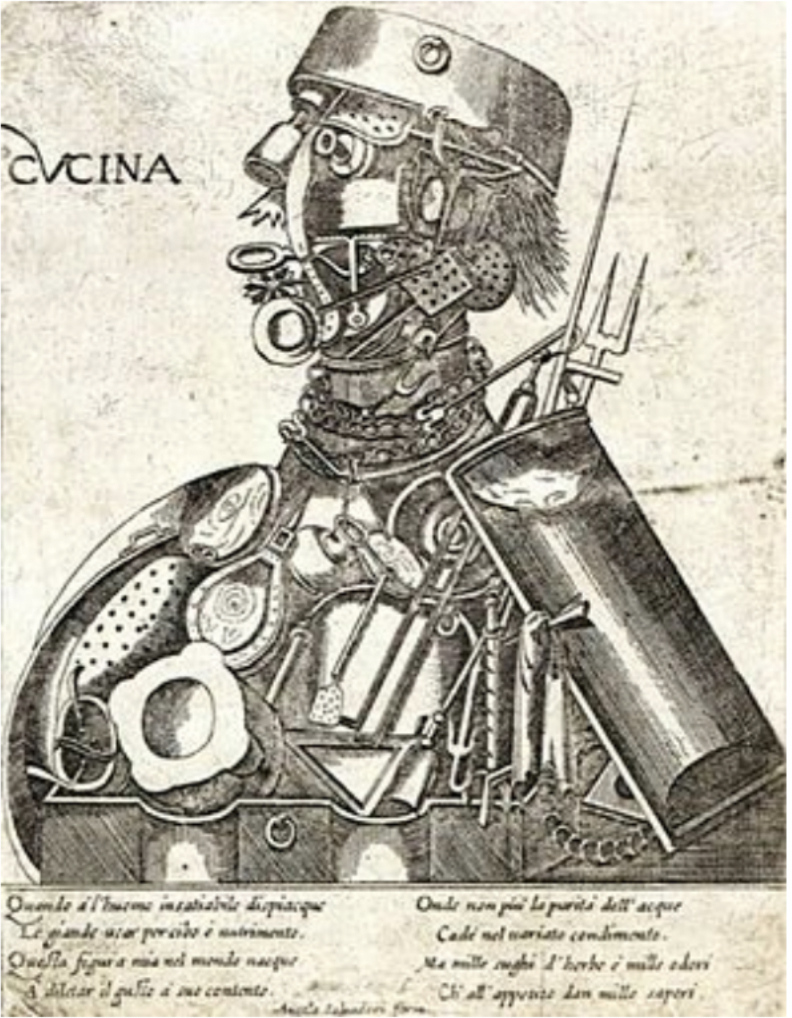
To me, this re-evaluation of the identities used to divide us by Haraway and her contemporaries and the pleasure taken in the melding of traditional social roles suggest a reclaiming of the Hobbesian model of control—instead of paranoid, divided slaves to a robot Leviathan, we use the homogenous, technologically infused modern era to decrease our dependence to our leader—building the potential for resistance should we need to stand up to our sovereign. Haraway teaches us to reject the divisions between each other and the citizen and their ruler, breaking down the social and technological barriers between the sovereign and those they represent. The representation of a cyborg attached to this post as figure 1 well reflects my interpretation of Haraway’s work and the political significance of the cyborg. While this depiction is an ancient engraving that predates Hobbes himself, it is used today to represent cyborgs within the context of Haraway’s work, and compliments her response to the repressive political regime of the last 4 centuries. While Leviathan’s cover features a white male giant, made of his subjects, looking down over his principality, Haraway’s cyborg features a single, decidedly unidentifiable humanoid—with no clear race or gender, as its defining features are all made of different machines. Furthermore, these machines are not all of a particular application—a colander makes the creature’s breastplate, and what could be a tool of war protrudes from its back—demonstrating how the cyborg overcomes the dichotomy between man and woman to form a homogenous identity. Perhaps most importantly, The cyborg is looking up, not down. The cyborg is matching the gaze of the towering leviathan, its sovereign—as if to demonstrate that free from internal divisions, subjects can dismantle the imbalanced relationship of power between subject and sovereign. This cyborg tells us that the subjects of the state need not be divided. As a homogenous unit existing above the divisions projected upon us, even through our mechanical means of representation, we can stand up to our leaders and resist their totalitarian control. Haraway’s work embellishes the message sent by its frontispiece through an immersion in our fractured identities in the 21st century, and uses them to reshape our interpretation of Hobbes’s philosophy.
The introduction of cyborg theory into the current social dogma is a strike against the continuous use of Leviathan’s theories for totalitarian purposes—an effort to reclaim our representation via an adoption of the divisions used to control us. This is not to say I think Haraway’s cyborg is a strike against Hobbes’s philosophy itself. Leviathan’s notion of a social contract to escape the state of nature does not strike me as draconian in of itself, the ways in which they have been introduced into our society has made them tools for enslaving and exploiting individuals. I think that applying Hobbes’s theories to our current circumstances in a non-draconian way requires a complete rework of the identity of the citizen, and the way they interact with their sovereign. The introduction of the cyborg identity into the Hobbesian dynamic between individual and state allows for a modern interpretation of the social contract, in which we take pride in a homogenous society instead of dividing ourselves into easily controlled groups. Just as pointed out by Maximilian Lakitsch in his article on Hobbes’s place in humanistic politics, Hobbes in the Anthropocene, the power of the citizens lies in their multitude —the collective will of the people shape the nation through exerting their collective will on their leader. Or: “only the multitude controls the multitude” (Lakistch, 10). Lakistch goes on to describe how the effectiveness of a government depends on its adherence to the will of the collective citizens—the sovereign must represent the will of the people. When the people are divided, there is no collective will for the sovereign to adhere to and our leaders are free to abuse us as they see fit. This is why the state of nature has been used time and time again to divide the people and make them more governable, and why the cyborg’s ability to blur the distinctions and moral gradients between different demographics allows it to meet the eyes of the sovereign—to form a united front and be visible to its leader. The Hobbesian model of control that has dominated our politics since Leviathan’s publication. I believe that Haraway and her contemporaries can reupholster the moral values of Leviathan to usher in a unified state with an administrative body that acts in the interests of its people—this will be the final vengeance of the Leviathan.